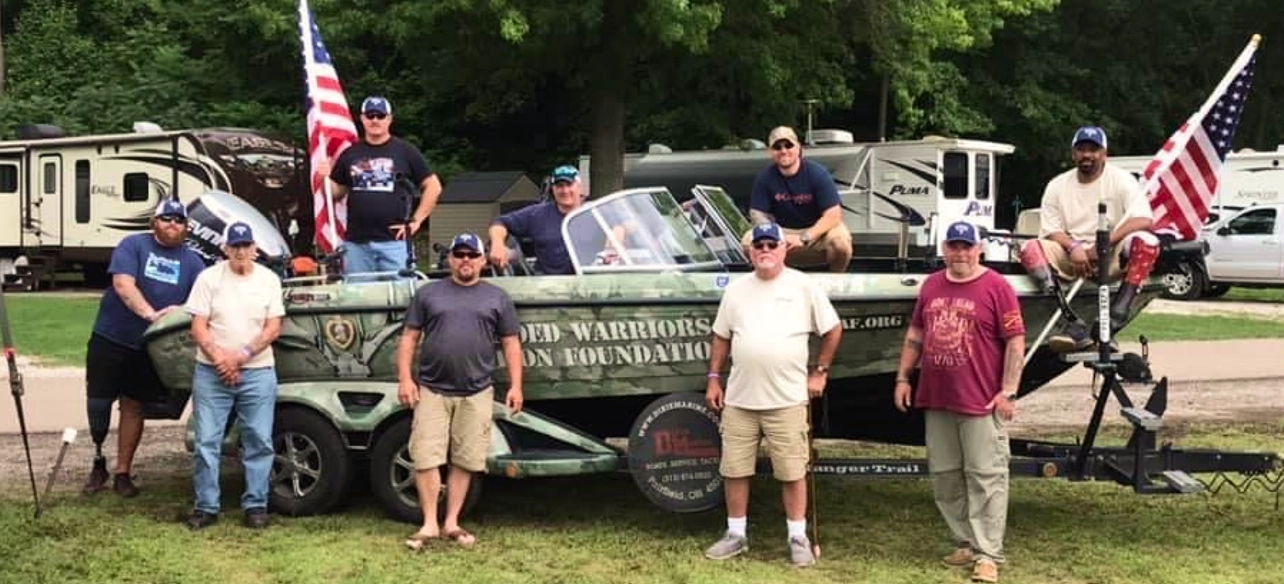
On this latest episode of the WWIA Podcast, WWIA Founder and CEO, John McDaniel is honored to spend some quality time with two of the Foundation’s long-standing friends and leaders. Today, we proudly welcome combat-wounded Purple Heart Heroes and WWIA certified Guides Jeremy Smith and Derek VanBuren to the show. Jeremy and Derek are attending WWIA’s 2nd iteration of their Leadership Development Program at WWIA headquarters in beautiful Apollo beach, Florida.
The Leadership Development Program is designed to identify, train, and develop key leaders within WWIA. Few have the opportunity to fully understand the inner workings of the organization—how events are planned, resources are managed, and operations are developed. This program bridges that gap by providing personalized leadership development experiences led directly by WWIA’s Founder and CEO. Participants will gain a deeper understanding of what it takes to plan, resource, and execute complex WWIA events and activities, as well as manage the day-to-day functions that keep the organization thriving.
Jeremy Smith served 2-1/2 years in the U.S. Army with the 101st Airborne Division. In 2006 he was injured by mortar shrapnel in Baghdad, Iraq, and was awarded the Purple Heart medal. After several surgeries and months of physical therapy, he was medically retired from service. Jeremy currently lives in Burke, South Dakota with his beautiful wife April, and their daughter Natalie and son Matthew. For the past three years Jeremy has owned and operated Star Lake Outfitters, providing exciting hunting and fishing expeditions. Hunting and fishing have always been a part of his life, but it never played such an important role until now. Since leaving the military, Jeremy has found special solace in the conservation of the outdoors, and the tranquility and peace it provides.
Derek VanBuren grew up with a love for hunting, fishing and trapping from an early age and his passion for all things outdoors continues to this day. While attending college, he worked as a hunting guide, which broadened his interest in hunting, especially bow hunting. Derek joined the Army in July of 1998 and was deployed to Afghanistan from Nov 2008 until July 2009. While deployed, he and other members of his crew were wounded by an RPG during an intense firefight. He then spent time in Lundstuhl, Germany, Walter Reed Army Hospital, and the Warrior Transition Unit while recovering from wounds, for which he received the Purple Heart medal. He attended his first WWIA event at Camp Hackett, Wisconsin in the fall of 2010 and has been a valuable part of the WWIA team ever since. Today he lives in Negaunee, Michigan, with his wife Katie and two children Eli and Amelia. He enjoys stream fishing for Brook Trout, fishing Lake Superior for Lake Trout, Predator Hunting, grouse and small game hunting, bow hunting of all kinds, and most anything outdoors.
Takeaways:
- The WWIA Podcast emphasizes the importance of honoring America’s combat wounded Purple Heart Heroes, fostering a sense of connection and healing among them.
- Participants in the Leadership Development Program are afforded the unique opportunity to gain insight into the operational and event-planning aspects of the WWIA foundation.
- The podcast features stories of resilience from combat veterans Jeremy Smith and Derek Van Buren, highlighting their experiences and the impact of their military service.
- The Leadership Development Program is designed to cultivate leadership skills among Purple Heart recipients, empowering them to contribute meaningfully to the foundation’s mission.
- Through outdoor activities such as fishing and hunting, the WWIA fosters camaraderie and support among veterans who have faced significant challenges in their lives.
- The podcast serves as a platform for sharing personal narratives that underscore the transformative power of connection, honor, and healing in the lives of combat-wounded veterans.
Companies mentioned in this episode:
- Star Lake Outfitters
- Pheasants Forever
- Wounded Warriors in Action
Transcript
Foreign.
Narrator:Hello and welcome to the WWIA Podcast. We're honored to have you join us in our mission to bring honor, connection and healing to America's combat wounded Purple Heart Heroes.
If this is your first time listening to this podcast, we welcome you. If you're a returning listener. Thanks for coming back.
Please be sure to tell others about our podcast and leave us a review if you're enjoying what you're hearing on this latest episode of the WWIA Podcast, WWIA Founder and CEO John McDaniel is honored to spend some quality time with two of the foundation's long standing friends and leaders. Today we proudly welcome combat Wounded Purple Heart Heroes and WWIA Certified Guides Jeremy Smith and Derek Van Buren to the show.
Jeremy and Derek are attending WWIA's second iteration of their Leadership Development Program at WWIA Headquarters in beautiful Apollo Beach, Florida. The Leadership Development Program is designed to identify, train and develop key leaders within wwia.
Few have the opportunity to fully understand the inner workings of the organization, how events are planned, resources are managed and operations are developed. This program bridges that gap by providing personalized leadership development experiences led directly by WWIA's founder and CEO.
Participants will gain a deeper understanding of what it takes to plan, resource and execute complex WWIA events and activities, as well as manage the day to day functions that keep the organization thriving. Jeremy Smith served two and a half years in the US army with the 101st Airborne Division.
In:Jeremy currently lives in Burke, South Dakota with his beautiful wife April and their daughter Natalie and son Matthew. For the past three years, Jeremy has owned and operated Star Lake Outfitters, providing exciting hunting and fishing expeditions.
Hunting and fishing have always been a part of his life, but it never played such an important role until now. Since leaving the military, Jeremy has found special solace in the conservation of the outdoors and the tranquility and peace it provides.
Derek Van Buren grew up with a love for hunting, fishing and trapping from an early age, and his passion for all things outdoors continues to this day. While attending college, he worked as a hunting guide, which broadened his interest in hunting, especially bow hunting.
ek joined the army in July of:tt, Wisconsin, in the fall of:Today he lives in Negaunee, Michigan, with his wife, Katie, and two children, Eli and Amelia.
He enjoys stream fishing for brook trout, fishing Lake Superior for lake trout, predator hunting, grouse and small game hunting, bow hunting of all kinds, and most anything outdoors. This is a wonderful episode, so without further delay, let's join John, Jeremy, and Derek right now.
John McDaniel:Hi, I'm John McDaniel, founder and CEO of the Wounded warriors in Action foundation, and this is our podcast, Honor, Connect, and Heal. I'd like to welcome back to the program two very special people. They're guides for the foundation. I've known them both for 12, 15 years.
We're not counting, but it's been a while. And these are just great Americans, both of whom are Purple Heart recipients, trained and certified guides through our program.
And they're here and have been here in Apollo beach with me and Danny Kersik for the Leadership Development program that we're running. And it's awesome to have you on the program. Gentlemen, welcome.
Jeremy Smith:Thanks, John.
Derek VanBuren:Thanks, John.
John McDaniel:Yeah, so it's good to see you guys. It's been fun so far. We've had a lot of fun, and we're going to talk about that, you know, what we've done.
But I want to start out and kind of level the playing field.
Both these great Americans have been on our podcast before, and I said we're into our third year of doing this, so, you know, I just want to welcome you guys back and just. I'll start with you, Derek, if you would just give us a quick, quick thumbnail sketch of, you know, hey, you're. I live in the up.
I do this, I do that, and, you know, take it from there. Your story, that's what we're looking for.
Derek VanBuren:Sure. Derek Van Buren. I'm from the Upper Peninsula of Michigan. I live in the town of Nagani. It's near the city of Marquette, if you'd ever heard of that.
It's right on Nagani.
John McDaniel:Sounds like an in. Like a native. Native American name.
Derek VanBuren:Yep. There. They all have those names up there, right on the shore of Lake Superior. Born and raised up there. Joined the army when I was 18 years old.
I spent 26 years total active duty and National Guard.
Narrator:Wow.
Derek VanBuren:Retired in July last year. Hold many. I held many jobs. I had air defense, mechanic, logistics. Wow. Doing supplies.
John McDaniel:What units were you the same unit the whole time?
Derek VanBuren:No, I was in several. I was. My first duty station was Korea, 2nd Infantry Division Division.
John McDaniel:On active duty.
Derek VanBuren:On active duty.
John McDaniel:Perfect.
Derek VanBuren:And Then from there 10th Mountain Division I was in 362 Air Defense Artillery as a 14 Sierra Avenger crew member.
John McDaniel:Wow.
Derek VanBuren:Yeah. And then from there ended up joining the National Guard later on and tried a few different jobs, different things I could try out.
Had a little break in service, came back in, became a combat engineer and that's what I deployed as. Route clearance. Good times in Afghanistan, places like that. After that, you know, I'd. I'd spent some time active Guard Reserve.
Had a few years of that job, which was pretty great actually. I enjoyed it.
It's a lot of aspects of the active duty and kind of getting to live in the area that you, that you want to live in, which is really nice. Sure, I enjoyed it.
John McDaniel:So you did about six years on active duty?
Derek VanBuren:Four years.
John McDaniel:Four years. Okay, two, two year. Two, two year assignments. But between. Oh, it's right. Korea is one.
Derek VanBuren:Right.
John McDaniel:So you did a one and then a three at 10th Motown?
Jeremy Smith:Yes, sir.
John McDaniel:Okay, got it.
Jeremy Smith:Okay, cool.
Derek VanBuren:So. Yeah, and then. Yeah, I mean that's, that's pretty much been my last, you know, since 18 years old doing that obviously.
My hobbies are hunting and fishing and trapping and.
John McDaniel:Yeah.
Derek VanBuren:Yep.
John McDaniel:Up there in the up. You got lots of opportunity as a yooper to do that.
Derek VanBuren:Yep, sure do.
John McDaniel:It's cold up in them parts. We were talking about that today. You got a lot of snow last year, didn't you?
Derek VanBuren:We did. We got, we got a lot of snow last year. Got to do a lot of snowmobiling, a lot of ice fishing, all that good stuff.
John McDaniel:You got a snow machine?
Jeremy Smith:Yes sir.
John McDaniel:What do you got?
Derek VanBuren:I got a, it's a Skidoo 900.
John McDaniel:Is that good for trail too? Like see, I gotta get. That's, that's on my list, man, is to get a snow machine and run a trap line up there, which I'm going to do.
That's, that's a bucket list thing for me, believe it or not.
Derek VanBuren:Oh, it's a good time. You'd enjoy it. You'd love it.
John McDaniel:Yeah, yeah, big time.
Derek VanBuren:Yeah.
John McDaniel:That's cool. So you have a family too and now you're working and tell us a little bit about that.
Derek VanBuren:Sure. So. Well, I got two. Two kids. I got. My son Eli, he's 21 years old football player. Football player, yes. He's a very good football player.
Plays Division 2 college football at the Northern. Northern Michigan University. My daughter, she recently graduated high school. She'll be starting at the same colle in the fall. She's 19.
John McDaniel:Awesome.
Jeremy Smith:Yeah.
John McDaniel:Good.
Derek VanBuren:Yeah, good.
Jeremy Smith:That's.
John McDaniel:Life's good as a dad, isn't it?
Derek VanBuren:It's great. I enjoy it. It's, it's one of the greatest things ever, really.
John McDaniel:It didn't come with a, like a, like a handbook, right? I mean, holy cow.
Yeah, I, I, I swear, sometimes not so much anymore because my boys are a little bit older, but when they were really young, you know, I just remember thinking to myself, like, I'd lay in bed at night and I'd kind of run the night of the day through my head, and I'd be like, geez, I think I really screwed that up, you know, and I said the wrong thing or I did the wrong thing, you know, and, you know, the next morning they're like, hey, dad. You know, you're like, it's a new day.
Jeremy Smith:All right.
John McDaniel:Okay. Everything's cool, man.
You know, it's just, it's great when they get a little bit older and you can, you know, relate to them, but when they're, you know, young, little bit young, little bit babes, it's, it's. I mean, I was. Not an easy time for me to crack that code, but I'm, I think I'm through that. But anyway, so now you're working.
What are you doing now, now that you're retired from the service?
Derek VanBuren:So I applied for a position at the Michigan Department of Transportation as an engineer assistant, and I ended up getting that, that job. And it's, it's, honestly, it's, it's enjoyable. It's laid back. It's, it's really, I guess, chill, you know.
John McDaniel:That fits you, though, man.
Derek VanBuren:It fits me.
John McDaniel:You are Mr. Chill. You know, Nicole, my assistant, and I were chatting about both you two. So we had Jake and Matt here on the first run, right? And, and she had.
I hope I'm not talking out of school here, but, you know, Matt and Jake are, you know, they're, they're they're hot. And I say high energy, but they're firing. You know, there's a lot of activity going on there. And you guys are on the, the, the Little more of this.
The, the, the, like, if they're in fourth gear, you know, you guys are in one and two, which I really appreciate, man. I mean, that's, that's really more like me. When I get around high energy guys, I get high energy. And that's. That's. That's a lot going on.
But Nicole said something like, you know, you went from. It was her observation because she. Only. I don't think you guys even met her yet. Have you.
Derek VanBuren:I haven't met Nicole.
Jeremy Smith:I've met Nicole.
John McDaniel:Yeah. Okay. You met Nicole.
Jeremy Smith:Yeah.
John McDaniel:A new one. 22 Head. But she was like, that's. You're going from Jake and Matt to, you know, you know, Derek and Jeremy. That's going to be a big shift.
And I go, what do you mean? She's like.
And then she talked about the energy piece, and I go, you know, that's a good observation, you know, But I knew when you two were coming in, I was like, this is gonna be super cool, man, because we're gonna be in a cool gear the whole time, so. Yeah, that's neat. Well, I appreciate you sharing all that, Jeremy. We love to get caught up on you, man. What's going on.
Bring us kind of the present day with, you know, your service, and then after that, we'll talk about, you know, your Purple Hearts and the one you guys got injured or wounded. I know. I'd love to hear it again, and I'm sure that those listening would. But get us up to speed on you, buddy.
Jeremy Smith:Sure. Thanks, John. I. I live in south central South Dakota, run a guide service, and work for pheasants forever. Building habitat.
I'm a habitat specialist with them.
John McDaniel:That's cool.
Jeremy Smith:Yep. Really enjoy it. Just outside all the time enjoying.
Narrator:Wow.
Jeremy Smith:Seeing what's going on, man.
John McDaniel:We got to get you up to Camp Hackett.
Jeremy Smith:Yeah. Let's get some habitat built.
John McDaniel:Yeah, let's do some. Let's do some.
Jeremy Smith:Manipulate some things.
John McDaniel:Let's do that.
Derek VanBuren:Yeah.
John McDaniel:That's a great idea. What a good thing. All right. I didn't mean to interrupt you, man. I just think it's cool.
Jeremy Smith:Yeah. I live down there with my wife April, and my son Matthew, who currently graduated high school and will also be going to college this year.
John McDaniel:Oh, good.
Jeremy Smith:But he's only 17, so he's on the other spectrum from Derek's daughter, and that's how both my kids were. My. My daughter lives in Mitchell, where Matthew's going to college, so it'd be good for them to be close to each other.
John McDaniel:Are they close?
Jeremy Smith:Pretty close. As much as close as a brother and sister two years apart could be.
John McDaniel:That's like me and my sister. We are very. But.
But, you know, we could we could go six months without seeing each other, and then it's just, you know, it's back on when we do, you know.
Jeremy Smith:Sure. Yeah. That's good. That's a good relationship. Yeah.
John McDaniel:So the two kids and, and this, this, this job you're doing. Tell us about your military. Let's do this. Tell us about your military career and take us up to, and go. And just go right into the time you got here.
Okay.
Jeremy Smith:Yeah.
John McDaniel:And then we'll, we'll hear Derek's story and then we'll move on to other stuff. But I, I can't, I just can't go on without hearing it. I just got to hear it.
Jeremy Smith:Absolutely. The August of:As soon as we got to base, we were fast tracked and sent straight to Iraq kind of as fill in troops. So less than six months and I was in country.
John McDaniel:So your, your unit was already deployed or you deployed with your unit?
Jeremy Smith:They were deployed and we just played catch up with them. They'd already been there six months.
John McDaniel:What's it like to get into, to come to, to integrate into a unit that's already deployed? What was that like?
Jeremy Smith:That was terrible. I bet, you know, those guys have been together for a certain amount of time.
John McDaniel:And you're the newbie, you're the FNG man.
Jeremy Smith:Absolutely. Yeah. We were not well received. We did imagine that you get in there, you know, it all worked. Yeah. You know, we meshed well. Eventually. Yeah.
John McDaniel:You got to get some time under rucksack. Right?
Jeremy Smith:That's right.
John McDaniel:And then it's, they're like, okay, he's all right. You know, now you're part of the unit. You know, get shot at together a couple times. It's all good.
Jeremy Smith:Right? Just enough time to get wounded and leave.
John McDaniel:Is that what happened?
Jeremy Smith:Yep. So seven days. So it was October, not seven days. In seven days from coming home.
John McDaniel:Oh, wow.
Jeremy Smith:Yeah, we were.
John McDaniel:You were there for how long at that point?
Jeremy Smith:Six months.
John McDaniel:Okay.
Jeremy Smith:it FOB loyalty. They. This is:So the Iraqis knew the drill by now. More helicopter traffic. Shoulder patch change. Let's hit them. There's more guys, they're more vulnerable. Everybody wants to shift, leave and change.
So we started getting hit with mortars on the FOB and I was, I think they knew. Absolutely knew. Wow.
John McDaniel:And that is a Good time. Because now you got, you got almost twice the force there. Because they know you're going to be transitioning.
Jeremy Smith:Right, right. And who comes in?
John McDaniel:Advan of the leadership.
Jeremy Smith:The leadership. So now there's twice the leadership.
Derek VanBuren:Wow.
John McDaniel:I never thought about. They knew it, but yeah, yeah, yeah.
Jeremy Smith:They weren't dumb.
John McDaniel:Wow. So you're seven days from going home.
Jeremy Smith:Correct. Seven days left.
John McDaniel:And what are you doing when this happens?
Jeremy Smith:I was actually changing a belt on a Hemet fueler.
John McDaniel:Okay, so You're a mechanic.
Jeremy Smith:Mechanic. 63 Bravo mechanic. And trying to change a belt on a Hemet fueler. Couldn't get it to work. Swore the PLL sergeant gave me the wrong belts.
I walked back five steps. Outside the door, mortars start dropping. First thing I hear is my platoon sergeant holler, you know, where's Smith out? Me, I'm right here.
We were mortared fairly often, so it wasn't a big deal.
John McDaniel:You just wait it out, seek cover and wait, Right?
Jeremy Smith:Yeah, we got into the little office, closed the plywood.
John McDaniel:You guys got like bunkers and stuff.
Jeremy Smith:You can go to?
John McDaniel:No, no. Well, we had bunkers that you can go to.
Jeremy Smith:No, no, Nothing.
John McDaniel:No overhead cover.
Jeremy Smith:Nothing. The overhead cover was surprises. This tin roof. Yeah.
John McDaniel:That's on a FOB. That surprises me that they and you had been getting mortared. So why in the hell didn't we.
Why don't you guys build some sort of, I don't know, makeshift overhead cover? You know, like a. I don't know.
Jeremy Smith:Yeah, there. There was nothing. There was one centralized area, nobody wanted to go into it. It used to be Saddam's torture chamber.
This complex we occupied was an old college area. So there's all buildings? Yes, one building.
John McDaniel:Your FOB is in the middle of what used to be a built up area.
Jeremy Smith:Yeah, right in the middle of eastern Baghdad.
John McDaniel:So there was some cover you could get in a building or something like that.
Jeremy Smith:The buildings had tin roofs.
John McDaniel:Okay.
Jeremy Smith:What kind of COVID is that? Orders come right through, Tim.
John McDaniel:Good point.
Jeremy Smith:Yeah. It wasn't the greatest. Well, anyway, that mortar lands just three feet outside our plywood door, takes out one of the, the two ID guys.
He did not die, thank God, because they were. That would have been extra traumatic. Terrible enough that all this happens.
John McDaniel:Yeah.
Jeremy Smith:But we did not lose anybody in that. I was in the seated position, my left side to the door. And when the mortar landed, shrapnel hit me in my left side, broke my tibia.
So I was struck in the arm and the leg fell forward onto the ground. The motor Sergeant was trying to call for help over the phone.
John McDaniel:Medic.
Jeremy Smith:Yeah, nothing's working. Can't figure out what's going on. He decides, let's just get out of this.
John McDaniel:So just two?
Jeremy Smith:No, there was eight or nine of.
John McDaniel:Us in there that all took shrapnel.
Jeremy Smith:Not everybody was hit. Okay, Most of us were, maybe seven of them.
John McDaniel:Did the blast break your leg?
Jeremy Smith:No, it was actually shrapnel.
John McDaniel:Oh, wow.
Jeremy Smith:Yep. Cracked my tibia.
John McDaniel:Okay, now your tibia, you've got the femur, the fibia, and the tibia. Right, that's the low.
Jeremy Smith:Right femur's upper.
John McDaniel:Yeah.
Jeremy Smith:And the low tibia, fibia is lower, so below the knee.
John McDaniel:Below the knee is where it broke the bone.
Jeremy Smith:Correct.
Narrator:Wow.
Jeremy Smith:Yeah. So he. My motor sergeant tried to get up, said, let's go. Let's get out of here. And I said, I can't. I can't stand.
And then looked down and saw the blood.
John McDaniel:Never didn't feel.
Jeremy Smith:Never felt a thing.
John McDaniel:But you felt the concussion, you see?
Jeremy Smith:Absolutely. Yeah.
John McDaniel:You had to have your bell rung too, right?
Jeremy Smith:Correct. Yeah, it was pretty rough that.
John McDaniel:And then you look down and you're like, okay, yeah, I'm here.
Jeremy Smith:Now we understand, right? He gets out the door, guys, start coming, start triaging. Put me on a stretcher.
John McDaniel:Seven days from going home.
Jeremy Smith:Right.
John McDaniel:Do you have a helmet on?
Jeremy Smith:No.
John McDaniel:Because you're working in the motor pool.
Jeremy Smith:I was working in the motor pool on the fob.
John McDaniel:It could have been under it, killed.
Jeremy Smith:You, could have been bad.
John McDaniel:Could have been real bad. I mean, because you're. I mean, let's face it, you're. You're lower leg and too far from your brain. I mean, relative to shrapnel.
And do you know what kind of mortar it was?
Jeremy Smith:They say it was an 82.
John McDaniel:Okay. Yeah. So be at 82 millimeter.
Derek VanBuren:Yep.
John McDaniel:I said, that's a. That's a decent mortar, man.
Jeremy Smith:Yeah, that'll.
John McDaniel:That'll do some damage. Wow. Well, thank God, man. I mean, it can always be worse, right?
Jeremy Smith:Absolutely.
Derek VanBuren:Yeah.
Jeremy Smith:Yeah.
John McDaniel:You look great today. You guys are both, you know, in your 40s, and you look tremendous, and just a great story. Resilience. And I'm so happy to have you here. It's. It's.
It's wonderful. I appreciate you sharing your story with us.
Jeremy Smith:Absolutely.
John McDaniel:So, Derek, let's hear your. Your, Your. Your story.
Derek VanBuren:So in:John McDaniel:So that's what your job Was, is to clear clear routes so that the rest of the forces could. Could go down it with some degree of certainty that there wasn't. Wasn't any landmines or improved explosive devices, whatever on the route.
Derek VanBuren:Correct.
John McDaniel:Okay.
Derek VanBuren:Yep. So we were on a. On a mission that day. It was an early morning. I want to say it was like four in the morning.
John McDaniel:What year is this?
Derek VanBuren:2009. And this was on July 19th.
John McDaniel:Okay.
Derek VanBuren:And we were running between two FOBs. Our job that day was basically clear for the 3rd of the 509th infantry, the 25th Infantry Division.
Narrator:Okay.
John McDaniel:Electric strawberry, guys.
Derek VanBuren:Yep, exactly. And we, we were, we were getting rolling.
Our mission was actually to dismount that day and get up into the high points and basically make contact and kill the enemy. That was what we were supposed to.
John McDaniel:Do that gain, maintain enemy contact. And there's no better way than getting out there and doing it.
Derek VanBuren:Right, Right. Well, before we could do that, we got ambushed immediately. And they estimated it was around 200 Taliban fighters that we were.
John McDaniel:So the route clearance team got ambushed. How far is the main body behind you? Or they. Not even.
Derek VanBuren:They're. They were pretty much right behind us at the time. Yeah.
John McDaniel:So you guys are leading this motorcade, this patrol, whatever you wanted to call this movement, clearing the route, and the main body is behind you.
Derek VanBuren:Correct.
John McDaniel:Okay.
Derek VanBuren:So we started rolling through. Usually our, our course of action when that happened was to just roll through the ambush because that's the. Pretty much the only thing.
John McDaniel:Get on the far side.
Derek VanBuren:Correct. And we're all rolling in MRAPs, mine resistant armor protected vehicles. Yeah. And we started rolling through and I mean, it was, it was intense.
You know, there was a lot of. A lot of gunfire. It was, it was.
John McDaniel:So they initiate the, the ambush with an IED or what was. What did they.
Derek VanBuren:There was no. It was. It was initiated by gunfire. RPG fire, small arms, stuff like that.
John McDaniel:How close is the. I mean, how close are they to you?
Derek VanBuren:It varied. It was anywhere from 50 meters to, you know, probably 800 to a thousand.
John McDaniel:So they got. Guys, this is an area that they've been observing and they're waiting for you to come.
Derek VanBuren:Oh, very much.
John McDaniel:Are you in a built up.
Derek VanBuren:We knew we were rolling into a big.
John McDaniel:Is it a built up area?
Derek VanBuren:Not at all.
John McDaniel:This was, this is wide open.
Derek VanBuren:Wide open, yeah, wide open. It was a wadi, basically.
John McDaniel:Okay, so there's high. There's high ground on both sides of you.
Derek VanBuren:Correct.
John McDaniel:It's a perfect ambush.
Derek VanBuren:It was a perfect ambush. And it was set up Perfectly, because the sun was coming up in the direction that we were firing, and they were firing at us.
John McDaniel:So they got the sun to their back, and it's right in your eyes, the last place. It's like a gunfight.
They say you want the sun to your back, you know, and if you're a hunter, you want the sun to your back and the wind to your face.
Derek VanBuren:Yeah, they knew what they were doing that morning.
So anyway, we started rolling through and we were hearing about as over the radio that a lot of the vehicles were taking some pretty heavy fire, a few guys were wounded, and we just kept rolling through and I, we were making our way around a corner and it kind of calmed down a little bit. This is about 20 minutes into the firefight, maybe 30. And I asked, I told my gunner, you know him, his name is John for French.
John McDaniel:French. Bless him, man.
Derek VanBuren:Yeah. And I, I told him, I said, okay, French, you go ahead and reload now. You know, he was. We were rolling with a.
John McDaniel:So you're the TC and Frenchie's your gunner.
Derek VanBuren:Yes, sir.
John McDaniel:That's awesome.
Derek VanBuren:Yeah. And we had a Mark 19 and a 240 Bravo on our, on our vehicle.
So he, he rolled to the, to the non contact side, reloaded, turned the turret back toward where the contact was coming from. And I remember him saying something. I don't remember exactly what the word was, but it was. He was distressed. Some rounds went, Flew.
Flew right by his hands. Like he actually saw, like the tracer rounds go right by. Shortly after that, a big explosion went off. An RPG hit the top of our vehicle.
We both sustained shrapnel wounds from it. He got the brunt of that because he was more exposed than I was.
He took some, you know, to the spleen, to Some burns in his eyes and a lot of shrapnel all over him. It shredded his elbow. My. My wounds were all in my shoulders. I took one in the leg.
John McDaniel:Well, he's higher than you.
Derek VanBuren:He's higher. He's right above me.
John McDaniel:Yeah, he's. He's above. Using it.
Derek VanBuren:Yeah, kind of above and behind.
John McDaniel:Right, right.
Derek VanBuren:The thing about those MRAP vehicles is they're very armored on the sides and on the bottom, but not really so much on the top. And they, they hit that perfect spot with the, with the RPG when they, when they fight that scene.
John McDaniel:Yeah.
Derek VanBuren:Right. So basically, I think we talked about this earlier, Jeremy too, like the, The. The. The slow down. The, the. The.
John McDaniel:The how time slows.
Derek VanBuren:Time slows right down and everything, your voices, everything slows down. It's. It's. It's really. It's a. It's. It's surreal when you experience that. Everything just. It's kind of. Kind of.
John McDaniel:Yeah.
You know, who did a really good job of that, for those that want to get a sense for what that might be like, is if you watch Saving Private Ryan and the Spielberg movie and the opening at D Day, where you got the Tom Hanks, the captain who's on the beach, and you can hear the rounds and the sound of the rounds hitting, you know, metal and the explosions, and it kind of. He slows the film down. It's in. It's in slow motion. That's what it's like. And you just have these memories of it, and it's in. You know, it's.
It's crazy.
Derek VanBuren:Yeah.
John McDaniel:Yeah. Wow.
Derek VanBuren:So, yeah, you know what I remember then, after that, once everything came to, was the burning feeling of the shrapnel and not being able to move my arms for a few seconds. And then I just lifted my arms as hard as I could. I just tried as hard as I could lift my arms, and I lifted them.
And, you know, after that, you know, realized that I was bleeding. And it takes a while for your brain to register what happens when you go through something like that.
John McDaniel:Well, you took a. You took a direct hit from an rpg.
Derek VanBuren:Correct.
John McDaniel:You're lucky. You're both lucky to be here.
Derek VanBuren:Extremely. My helmet looked like shredded cabbage. Once the RPG hit us and the shrapnel, you know, and gone through. And this was after the fact.
This is that they let me know this. You know, once.
Once we were gone, the whole situation, you know, everything just kind of happened so fast and everything is such a blur, but you remember certain things about it. I can remember the smell of the smoke grenade that got detonated inside the vehicle. There was a green smoke grenade that went off.
John McDaniel:And that smell. Undeniable.
Derek VanBuren:Undeniable smell. Yeah, that was covered in green. We were all green. Green smoke.
John McDaniel:Still. Little things like that.
Derek VanBuren:Little things like that.
John McDaniel:Wow.
Derek VanBuren:Yeah. But, yeah, eventually we got to. We got through it. The. The enemy retreated. We got to a point to where we stopped, set up security. Medevac came in.
They hauled us away on a Blackhawk helicopter back to base. And that was just you and French? Oh, no, there was several more. Yeah, there was. There was several more. There were some casualties.
There were some that were. There were some Afghan army that were deceased in that. In that contact. So, yeah, it was. It was intense, but so.
John McDaniel:Well, I appreciate you guys sharing Your story with us, man, it's. I know it's not easy to talk about, but, you know, we're.
We're all very proud of you and, and, you know, thankful for what you guys did for, for our country. And yeah, I mean, those are things you're never obviously gonna. Gonna forget. But, you know, it also brings you closer in some way.
I mean, you made it right, and a lot of guys didn't make it, and that's. It's a pretty powerful story and resilience, you know, so appreciate that a lot. So we, we.
Let's talk for a minute, shift gears here and talk about this leadership development program, just for the audience and for the record, you know, I've been working on this program for several years thinking about what I wanted to do in the way of leadership development, with whom I wanted to do it in the organization and why I wanted to do it and how we were going to do it and what did that look like, and then how was I going to fund it?
So I was, you know, we had, we had put together several funding proposals to do this because it's, it's not cheap flying guys in and putting them up and, you know, resourcing it and all this. And I just couldn't get anybody to bite on it, man, and say, you know, I'll help you fund that. So we just said, you know what?
Damn the torpedoes, we're gonna take it out of hide and do whatever we have to do to make it happen. I said, we're gonna do this. So that's what we've done, and I'm super happy that we're doing it.
This is iteration number two, and we're taking the guides, great Americans like you guys, and we're bringing them here. And the idea was, I'll say it, because I gave it a lot of thought.
And that thought was I went back into my military career, and of course, in my civilian world, I've had some really good leaders in the civilian world, you know, a couple bosses I worked for.
And I just began to think, think about, well, what was it about that guy, you know, that I, you know, felt like I was going to work harder for or I just didn't want to disappoint.
It's sort of like that relationship I had with my dad, you know, I mean, why was I staying out there in the heat scraping, you know, the stain off of the cedar planks on the side of the house for eight hours? Why was I doing that? It's not, you know, as an Example?
Well, you know, I was doing it because I knew my dad was going to come out and inspect it and, and I knew that I wanted to make him like, proud of what I was doing. And it's the same thing about the leaders, you know, that I felt like I was working that hard for. I was like, why?
Well, what was it about him that he. Why do you know? And I could never really put my finger on it. The French say.
It's a, you know, the fancy French way of saying it, you know, for what it's worth, is the je ne sais quoi. The, you know, the. I don't know what it is. You know, it's like when you say you're going shopping, right, you don't know what you're shopping for.
But when I see it, I'll know. Right. It's that same thing, isn't it? There's a magical component to it that I could never put my finger on.
I know the army defines leadership as purpose, direction and motivation. And there's the art form of it and all this.
And I get that I'm bought into it, but why would I follow that guy through the gates of hell with gasoline soaked underwear? Why would I do that?
I mean, I have answers for it, you know, I do, but it pretty much starts and ends with, because I admire him and I don't want to let him down. And I didn't even see the guy that much.
It wasn't even like, I'm talking about battalion and brigade commanders or company commanders, you know, I have a couple of them in my life. I was like, you know, holy cow, man, that guy. I mean, I just damn near do anything for me, you know. Yes, sir, no, sir, three bags full.
But there was others that I would still be a good officer and do my job.
But I, I can tell you one thing, some of the officers that, that I had, you know, that I worked for, didn't, didn't yield that level of, I don't know what the word is that I didn't feel the same way about, I guess the best way to put that.
So I gave it a lot of thought and I thought, you know, what could we do here in this organization so that I could spend more time with you guys so you guys could see more, you know, more of me and how I actually live. I mean, we're going to eat steak in my house tonight. You guys were out there fishing with the best guide that I know in Tampa Bay, Phil Pagley.
We had the best, you know, cameraman Videotographer, you know, productionist that I know. You know, with Danny Kirsak here with you guys, you know, I just thought I could. I could put something together that you guys could walk in tomorrow.
You're going to meet the staff that you've never met. You're in the headquarters you've never been in.
And I just thought that, geez, if you guys walked out of here after a long weekend of packed full of cool stuff, getting to know me better and the organization better and had some training in there, too, because we're going to do some suicide prevention training stuff for you guys, load up your rucksacks a little bit with good stuff that you might walk out of here going, you know, I get a little bit more. I got another piece of the puzzle. I understand it. I'm more connected, and I. And I somehow am better, you know, equipped to go out and do my job.
And you guys lead. Have been leading events for, you know, 10 years plus, and doing a phenomenal job. And.
And I see you guys as the future of the organization, so that sets up LDP for you. But that's. Jeremy, you start and tell us so far about your weekend, man. I mean, you got to do a lot of things I didn't get to see.
I wasn't on the fishing trip with you, and I wasn't with you when you were chatting with Danny. But, you know, we just did a tour of MacDill Air Force Base, which is pretty cool. But, you know, you got. What do you got to say about all this, man?
Jeremy Smith:Yeah, well, it's an honor to be down here. You know, it's a lot of fun to meet the people that we talk to and converse with very regularly.
Narrator:Right.
Jeremy Smith:But never put a face to. So I'm excited to meet the staff. I was pretty fortunate to get to go out on that boat and. And cap fish with Captain Phil and. And Derek.
We had a great time. Learned a lot about saltwater fishing here in Tampa Bay.
Just simple tips and tricks, and we did a lot of running around and changing gear, just adding to that rucksack, as you say.
John McDaniel:I saw you caught a nice snook.
Jeremy Smith:Yeah, awesome snook.
John McDaniel:Who caught the 33? Was that you?
Jeremy Smith:That was me. It was awesome. Yeah. Great fish. Good fight. Beautiful. They're very, very cool fish. Never seen a snook before in my life.
John McDaniel:You know what it reminds me of when I first. When I caught my first one and I examined it really well. It's like, you know, this is like a cross between A walleye and a bass.
Jeremy Smith:Yeah, he's got this vertical line. Yeah, yeah, yeah. Pretty neat fish.
John McDaniel:Yeah, very. And they're. They're tasty, too. They're out of season right now, so we left to let everything go, but. Yeah, so. Yeah, good, man. I'm excited.
I'm excited about what's good. What. You know, tomorrow will be a fun day. Tonight we're just going to go back and burn some. Burn some meat.
Maybe may watch a hockey game or something. I don't know. But yeah, you know, when we get all done with this and you get back to the.
To South Dakota, you know, some time to reflect on this a little bit. And, you know, also I'm going to tell you guys, you're. Don't let me forget, but I'm going to give you a.
We're going to give you like a hot wash. You know, what. What was good, what was bad, you know, what you like more. Your feedback on this whole thing is important to me. Very important to me.
You know, we took some of the things I learned from Jake and Matt incorporated into this, so I'm going to take some things from you guys and I'm sure make minor modifications as we move forward to the next group. And I have to say that what you have to say is important and it'll shape, you know, the. The future iterations of this as we go. As we go on.
So, you know, this is supposed to be three, you know, who is supposed to be with us.
Jeremy Smith:That's right. Greg Brzezinski.
John McDaniel:Yeah. So. Well, I've been praying for him and. And I know a lot of people have been, and.
And you know, he was supposed to be on this mission with us and he got in an accident and, you know, he's still in and out of icu and.
And you know, maybe everybody who's listening to this can, you know, send a prayer up and ask the good Lord that, you know, Greg heal rapidly and recover and get back to, you know, a normal life. But he was supposed to be here and putty. Hopefully you get to listen to this someday.
And we were just thinking about you and wishing that you were here and wishing you well. So. Yeah. You got anything else you want to say, buddy?
Jeremy Smith:No. Okay. I mean, besides talking with Danny, that was pretty eye opening, you know.
John McDaniel:I bet it was.
Jeremy Smith:He's pretty talented and a special guy, and I've known him for quite a few years, so it was pretty nice to reconnect. Yeah. The. Derek and Danny thought I was kidding when I said what is Tick Tock? What is Instagram?
You know, we're talking about these, these newer feeds, and I have no clue how these things operate. I'm just old. The Facebook words, right? And that's that, like, Facebook has Facebook reels. Why do we need all these other platforms?
My kids tell me I'm old. Dad, you're old. Well, I guess I'm just gonna have to get with the times and figure it out. But that's what it takes now.
John McDaniel:Well, you know, part of the, that to bring Danny, you know, Danny in, In full circle here. You know, he's a very talent man.
Not only is he a very talented musician, he's a, you know, guitarist, and he's played in several bands to include Dolly Parton's band, Once Upon a Time. But he's also a tremendous photographer and video man, and he's worked on several syndicated programs and done lots of freelance work and so forth.
But I asked him to come along because I just know that there's a lot of power in telling stories. And today, you know, going back to the Tic Tac, by the way, the foundation's not on TikTok. I. I pumped the brakes on. I didn't pump the brakes.
I hit the brakes on.
Jeremy Smith:Oh, good. I appreciate it.
John McDaniel:Yeah, no, we're on everything else, you know, Instagram, X, you know, which was former Twitter, I guess.
Jeremy Smith:Well, we'll have to have a conversation about that because I don't know what that is either.
John McDaniel:Yeah, well, if you say you're old, I must be a dinosaur, man. But, yeah, you know, the thing of it is, is that it's, it's, it's. And it's very cost effective public relations.
And if you're running a charity, you know, news flash, you got people who want to support you or think they are interested in supporting. You need to know, what are you doing? Because there's a lot of charities out there that, you know, you might want to, you know.
Well, you got to take a hard look. I mean, a dollar is hard to get, right?
And people who support charities need to know that what you're doing, you know, on the working aspect of it is having an impact. Right? And so people have options. They got lots of options out there in the charity space. We're a veteran charity.
It happens to cater to Purple Heart recipients and happens to do outdoor sporting activities, you know, as a means of honor, connecting and helping, you know, heal. That's what we do. That's our mission set. There's a ton of data out There that says that what we're doing is good or if not, great.
But it's, you know, people are visual. They don't want to look at a PowerPoint slide deck.
They don't really care what I have to say, you know, I'm a talking head, you know, but they, what they have, what they care about is what you guys have to say. I mean, you're the. Not only you, the recipient of the, you know, and hopefully benefiting from the program, you're actually leading the space.
So your opinion's a lot more important from my perspective and opinion anyway. But yeah, no, I appreciate you sharing. That's why I brought Danny in is to load your rucksack up with some other ideas and thoughts.
And it's not me, it's not me saying it because I'm not an expert in that space. Danny's an expert at capturing that moment, you know, whatever that is. And, you know, so we think about it like before, during, and after.
Right before. It's like PMCs, you know, prevent maintenance checks and services before operations, during operations and after operations.
You know, that's the way it unfolds perfectly in our space. And if we could add a little social media, you know, say qua. To the whole thing, people might go, oh, I get it.
Narrator:For years.
John McDaniel:People would say, what are you doing, man? That's just. Honest to God. They say, I'm sorry, I see your Facebook page, but what are you doing? And I'd have to explain.
I'd have to sit there and go, what am I doing? Well, I'm taking these great Americans out hunting and fishing. What are you doing? Right, right.
And then as I got to think about it, I was like, what are we really doing, man? What's really going on here? I know I'm feeling something. I know they're feeling something. There's some, like, magic happening here.
And I don't know what that is. And it's not really magic. It's, it's. It's. It's a lot of layers. But I mean, if you. What they all say, read the testimonials. Every single one.
,:Like, hey, you know, I got. The number one comment is I got to be with my buddies, you know, my peer group. You know, I got the bond.
I got to relax, I got to meet these dudes and, and they feel really good because you guys are in a really exclusive little tribe. News flash to kind of purple heart. Now. I know you didn't want it. I get that. That's what makes it even more special.
Nobody goes out there looking to get wounded or, you know, God, you know, forbid, killed, but you know, you're in a pretty cool club and, and you can't help but respect that. And that's what I thought when I started this. Like, I got to respect it and I want to be around guys like you.
You know, that's, that's the end of my story. But yeah. So, Derek, here we are, man, this weekend. What'd you think?
Derek VanBuren:I enjoyed the whole thing. The fishing was great. You know, going on with Captain Phil. Caught a shark. That was pretty cool. Black tip shark.
It was a, it was a adolescent shark, but it was, it was still a shark bigger.
John McDaniel:As time goes on.
Derek VanBuren:Absolutely.
John McDaniel:It'll be five or six feet by the time, you know.
Jeremy Smith:And just because you caught him when he was two feet doesn't mean he won't be six. He's a six foot shark. There you go. Your story in three years.
John McDaniel:Yeah, I told, I told Dylan last night. My, my oldest, I chatted on the phone. I told him you caught a shark, got a shark, because we, they loved a shark.
They would rather go catch shark than anything. And especially those little black tips because they're in shallow water. They're screamers, man. That's a, that's a good fight.
That fish got no quit in it.
Derek VanBuren:Oh, that's surprising.
John McDaniel:And it's got a mouthful of teeth, so you got to respect them too, you know. But anyway, so. Yeah, go ahead.
Derek VanBuren:So, yeah, I mean overall, the day on the water was, was great. You know, we caught quite a few different types of fish.
John McDaniel:Did you get a flounder too?
Derek VanBuren:We got a flounder. We got a grouper. Of course, the snook.
John McDaniel:Yeah.
Derek VanBuren:Was there anything else, Jeremy? Oh yeah, Trout. Yeah, that's right. Yeah, we got a trout.
Jeremy Smith:Yeah, we saw needlefish. Haven't followed bait. Never, never hooked them. I don't know, are they.
John McDaniel:That's not a game, a grabber, it's a, it's a bait fish.
Jeremy Smith:Yeah, okay.
John McDaniel:Sorta kinda.
They're kind of like ballyhoo, but you know, ballyhoo is a better bait fish, but the needle fisher, it's funny because the boys figured out how to catch them. You gotta use these tiny little gold hooks and just tip it with a piece of shrimp, you know, and they'll get it every time.
But I'm talking, you know, these double X, you know, tiny little gold hooks. Right, right. And so we, they catch them. Dad, dad, dad. You know, when they're younger, I say, yeah, watch it, man.
Those guys got a mouthful of teeth and they're sharp. They call them needlefish for a reason, man. Those teeth are like needles. Okay, dad, well, what do you think happened?
Jeremy Smith:My hand in there exactly?
John McDaniel:You know, there's blood all over the dog, you know, And I said, same thing with the barracuda. I said, don't. They finally caught a barracuda. Sick down, buddy. You gotta watch that fish, man. They, that their, their teeth are razor sharp.
Okay, dad, what do you think happened? You know, he tells that story to this day. He's like, well, you know, that's right. Anyway, so you had some fun. That's cool, man.
You know, we've been at this, we're gonna roll this thing up here. You know, I appreciate you, but I do want to touch on one thing.
You know, in the pre show, we were talking about le leadership, and I asked you guys to consider over lunch, you know, talking about what does leadership mean to you?
And, and you know, some examples of, of it maybe from your, your civilian jobs or your military experience, you know, but what is it, you know, what, what, what's that?
What, what, what about certain leaders have you found that made you or give us example of somebody who you would, you know, maybe gravitated towards or really thought was a, a good leader? And why, Jeremy, you want to, you want to go first, and then we'll roll up with you there? Derek?
Jeremy Smith:Yeah, I mean, leadership's a pretty important thing, and without it, where are we going to be? Somebody's got to follow. We can't all be at the top, right? What do they say? Too many chiefs, not enough Indians?
Well, a good leader, somebody that want, that you want to follow. And man, I think Derek and I are still sitting here after 13 years because we found a leader to follow.
Derek VanBuren:Nope.
John McDaniel:Oh, man. Okay.
Narrator:Yeah.
John McDaniel:Well, I appreciate that. I don't know what to say about it, but I'll tell you that, you know, it's an honor to be around you guys, man.
And I, I feel like, you know, I think a good leader is somebody that will all that also will, will follow. And I, I look at you guys and I feel like, you know, man, I, I, I'd follow you guys too, man, no problem. I wouldn't even have flown like an eye.
But you know for sure. No, I, I appreciate that, Derek. You got something, I'm sure somebody in your. Your past that you know.
Derek VanBuren:Oh, sure. I guess a leader to me is someone who can basically influence or motivate a person.
John McDaniel:Yeah.
Derek VanBuren:You know, sometimes, you know, it's.
It's kind of one of those things where you, you figure that out about the person the first few seconds of meeting them, whether or not they're a real leader or not, you know, And I don't know, I. I'm gonna, I'm gonna go throw this one out there. And I know a lot of people might say this, but the example of a leader to me growing up was my dad. That man you wanted to.
You wanted to do things for him. He was a hard worker.
John McDaniel:Yeah. And didn't want to disappoint him. Right, exactly. As my dad was the first leader that I remember, you know, when I look back on.
And of course he's your dad, you know, he's going to teach you right from wrong. You know, he's going to, you know, he didn't. My dad didn't give out faint praise.
You know, faint praise like, oh, you know, good job, John, no matter what,.
Derek VanBuren:I did earn it.
John McDaniel:You damn right you had to earn that. And when my dad, you know, gave you the, you know, the little head nod, like, of approval, you were like, man, I mean, that went so far. Right.
And it wasn't because he was like a super hard man. I wouldn't say that. It's just. I know his dad was like, he. That's how, how he grew up.
You know, he described my grandfather who I, I'm told I met, but I don't remember him because, you know, he passed before I was old enough. But I know he was a hard man and classic Catholic family. You know, they had like six girls. And my dad, my dad grew up with six sisters.
And that's just crazy to me. But. Yeah, no, you're right. Dads. Dads are, you know, I know some guys have examples of, you know, dads who maybe didn't do, you know, a good job.
And I'm, you know, I'm sorry about that, but that really is an example of a good leader and coaches, too. You know, I mean, I look back on. On some coaches and I was blessed, of course. I was on active duty for 20 years. I was around some, Some amazing men.
And I'm not going to mention any names because that list is long and quite distinguished. But, you know. Yeah, you're right, Jeremy, it's. You Know, we all. We all can't be, you know, chiefs. We gotta have some Indians.
But, you know, lead, follow, or get the hell out of the way. You guys are leading. Every time you go on a mission, whether you like it or not, people are looking at you. The guys are looking at you.
And this isn't the kind of space anymore. We're like, grab your rucksacks, follow me. You know, we're not. We're not doing that, you know.
Jeremy Smith:Right.
John McDaniel:But it's just the fact that you're there, you know, leadership is there. Right. And they're experiencing. That's the other thing is I would never ask you guys to do anything I haven't already done or wouldn't still do.
I might physically be able to do some of it anymore. I don't know. But I would never ask you. And that's. I think a trait of.
A trait of a good leader is never ask your people to do something that you haven't done or aren't willing to do. You got to go out the wire, and if the boss is in the rear with the gear. No, no. And there's something not right there. Right.
Derek VanBuren:Yeah.
John McDaniel:He's got to, you know, he's got to be present with you. That's whether he's a surgeon or, you know, Lieutenant. That's just the way it is. Anyway, you guys got any safe rounds, last things?
Anything else you want to. You want to share with us before we wrap this up?
Jeremy Smith:I just think this is a. A great opportunity to be able to see kind of the depths of what makes the Foundation. The Foundation. Yeah.
John McDaniel:You know, tomorrow you guys are going to get a.
Jeremy Smith:That'll be helpful.
John McDaniel:A double bucket load full of that, because, you know, I'll probably turn my button. You know, it's on that whiteboard there. But both sides of it are scribble.
So this is where I sit every day when I come to work and, you know, dream of neat stuff for other people to do. It's not glorious work, but we're back here.
We're like the hamsters on the wheels, you know, making an alternate, trying to make it transparent for everybody else, like the grants that we have to write, the administration, things that, you know, that just have to be done. The logistics, the communications, the resources and all. Like, this is. This is the hub of all the activity that's being conducted across the nation.
Right. Right here, you know, and it's not just you guys. It's. It's obviously the hosts, it's obviously the supporters.
God bless you all for helping make this thing happen. You know, if you're listening and you're a host or a supporter, you know, somebody who's provided us resource to do this mission. Thank you.
You know, because we can't do it without you. And nobody. I certainly me didn't think that 20 years ago that we'd have 42 missions in 30 some odd states doing this. I had no clue.
But we can't do it without you. You're doing a great job.
And you know, these tremendous guides are, are your connection to, you know, the chair I'm sitting in, I guess is the best way of saying it, but you guys are doing great and I'm proud of you. And I, I, you know, I can't thank you enough for what you're doing.
,:And these hosts are looking forward to this every single year. You know, that's crazy. I didn't ask any of them to help. I didn't ask anybody to help.
You know, so you got that kind of organic growth from people who genuinely want to make a difference in your lives. And that's, that's a powerful equation right there, if you ask me.
Derek VanBuren:So it really is amazing what all they do really is from, you know,.
John McDaniel:From the meals they put on to the, the homes that they open up, the land they give us access to, to the people they surround you with. That's crazy. You know, but that's why I say it's, it's, it's delicate. To me, it's, you know, it's nothing to ever take for granted.
It's like, to me, it's like having this little bird in your hand. That's how I look at it. Like when I first got, when somebody first.
The first check that anybody ever wrote to the foundation, when, you know, was year, it was 20 years ago, times longer than that, because I don't even think we were, you know, I don't even think we were established. Anyway, it's about 20 years ago, and I was on go on the road, going somewhere. And my assistant called her name at the time, I think was Christina.
And I was in Boca Raton, and my office was in Boca on the other side of the state. And she's like, Mr. McDaniel. My phone rings, I'm in the airport. And Mr. McDaniel, I said, yeah, what's going on?
She goes, there's a check here, or there's an envelope with a check in it here, I think so I'll open it up. She's like. She makes this noise, and I go, what is it? She goes, it's a check. Well, how much is for? She was $5,000, I guess. $5,000?
Who's it made out to? She was just made out to the Wounded warriors in action. I said, whose name's on it? She goes, appreciation of earth and animals. I go, what? I was like.
And I was like. I just like, of course, you know, it took like, five more years before we got another check, but I was feeling pretty good.
I was feeling pretty positive about the opera, about the prospect. But, yeah. So to me, it's like this little bird. You just got to take care of it, man. You can't take it for granted. It's.
It's delicate, it's super strong, and it's very capable, and it's. You know, it's no longer this little bird. It's more like a pterodactyl at this stage.
But I still like to treat it like it's this little, you know, this thing that you got to be careful with. And that's how I treat it, just out of respect more than anything else, you know. So, anyway, thanks for listening.
Hope everybody has a great day, and thanks for what you're doing. Okay, bye.
Narrator:Thank you for listening to the WWIA podcast.
To learn more about the Wounded warriors in Action foundation and how you can get involved, please visit our website@wwiaf.org or follow us on social media on Facebook, Instagram, Twitter, and LinkedIn. If you'd like to comment or offer feedback about our podcast, or if you have a suggestion for a future episode episode, please email us at.
Podcast thank you for your support and for helping us honor, connect, and heal our combat wounded Purple Heart heroes through the power of the great outdoors.