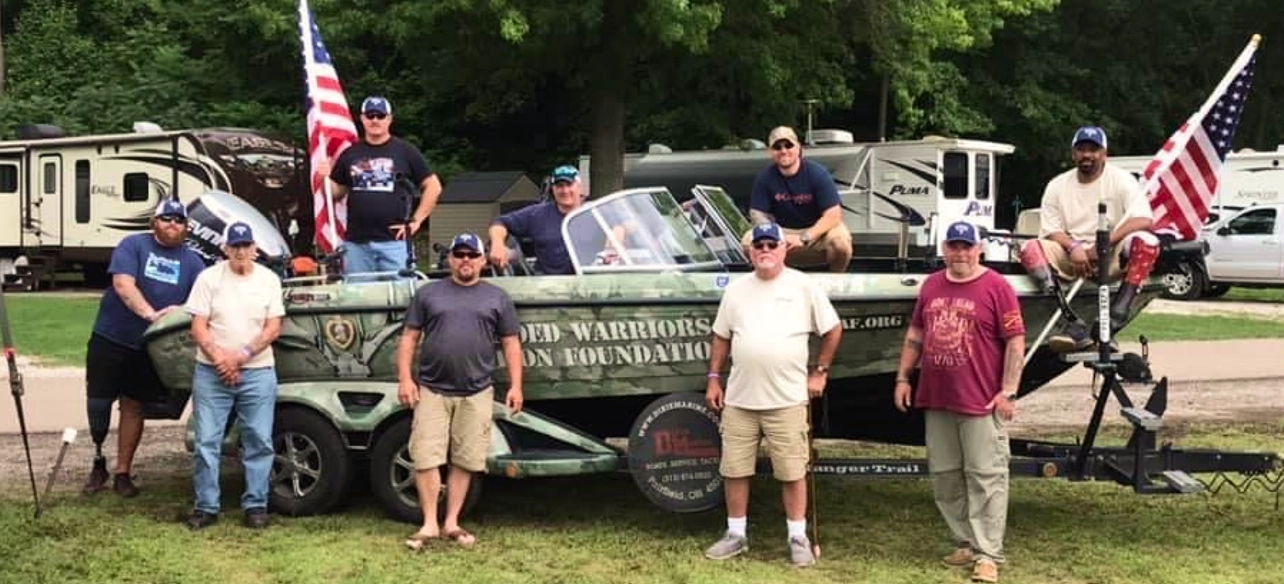

On this episode of the WWIA Podcast, WWIA Founder and CEO, John McDaniel spends some time talking with Mr. Dave Hintz, one of the Foundation’s longest and most ardent supporters. Dave is the founder and driving force behind Hides for Heroes, a phenomenal fundraising powerhouse based in Waupaca, Wisconsin. Through their tremendous hard work and collective efforts, the incredible Hides for Heroes team has donated over $127,000 to WWIA since 2012! Dave’s dedication, patriotism, and thoughtfulness are second-to-none, and we hope you enjoy getting to know him and his example of how one person’s ingenuity and generosity can blossom into something amazing that impacts thousands of lives! We know you’re going to love this episode.
Takeaways:
- The extraordinary initiative known as Hides for Heroes has significantly contributed over $127,000 to the Wounded Warriors in Action foundation since its inception in 2012.
- Dave Hintz’s unwavering commitment to supporting veterans exemplifies how individual effort can lead to remarkable impacts on the lives of many.
- Through the process of collecting and donating deer hides, countless veterans benefit from the generosity and ingenuity of dedicated individuals like Dave Hintz.
- The collaboration with local volunteers and organizations emphasizes the power of community in making a tangible difference for combat-wounded heroes.
- The podcast highlights the importance of connecting veterans with supportive networks and the healing power of shared experiences in nature.
- Listeners are encouraged to engage with the Hides for Heroes initiative, fostering a sense of community and support for those who have sacrificed for our freedom.
Companies mentioned in this episode:
- WWIA
- Hides for Heroes
- Waupaca Foundry
- Myron Construction
Transcript
Foreign.
Narrator:WWIA founder and CEO John McDaniel spends some time talking with Mr. Dave Hintz, one of the foundation's longest and most ardent supporters. Dave is the founder and driving force behind Hides for Heroes, a phenomenal fundraising powerhouse based in Waupaco, Wisconsin.
to WWIA since:Dave's dedication, patriotism, and thoughtfulness are second to none, and we hope you enjoy getting to know him and his example of how one person's ingenuity and generosity can blossom into something amazing that impacts thousands of lives. We know you're going to love this episode, so let's jump right in and join the conversation with John and Dave.
John McDaniel:Hi, I'm John McDaniel, founder and CEO of the Wounded Warriors in Action Foundation. And this is the Honor, Connect and Heal podcast.
And continuing on in the north woods with Dave Hintz, a very close friend of mine in the foundation here at campus. And Dave is with us today. And let me set this up a little bit. First off, you know, Dave is the guy who started the Hides for Heroes program.
And through that program, turns out Dave is the number one top donor here at Camp Hackett in this wonderful enterprise that we have in the North Woods. Dave, welcome to the program and thank you for all you do.
Dave Hintz:Thank you, thank you. Thanks for welcoming me.
John McDaniel:Yeah. So here we are in the Airstream. And you just recently arrived here at camp. Tonight we've got a community dinner.
And so for those that don't know out there, you know, I'll set this up. Dave goes around and collects deer hides. I mean, you have boxes all across Wisconsin right now, right?
Dave Hintz:Central Wisconsin.
John McDaniel:Central Wisconsin. These are large crates. Okay, what are they, four by four?
Dave Hintz:Yeah, they're a shipping container we use at the foundry. We'll pack a foundry donate them to us.
Narrator:Right.
Dave Hintz:So they're called cat boxes.
John McDaniel:Cat boxes?
Dave Hintz:Yes, for caterpillar.
John McDaniel:Okay. Right on.
Dave Hintz:Okay. Yeah.
John McDaniel:So these are big wooden boxes.
Dave Hintz:Yep.
John McDaniel:And, and, and people who, who, who harvest whitetail deer, nor most of them, you don't start putting them out until the gun season. Right?
Dave Hintz:We're going to put them out. We put them all at the end of October, about three weeks.
John McDaniel:Okay, so these boxes go out across the central Wisconsin and people who. And it says Heights for Heroes on it.
Dave Hintz:Yes, sir.
John McDaniel:And these, these people who are deer hunters and there's lots, God bless America in Wisconsin go out and harvest a white tail deer and then they take the hide off it and they go and Put the hide in the box. And then normally the weather's a little cooler that time of year, hopefully, thankfully. And so then the boxes get full.
Dave Hintz:Yep.
John McDaniel:Okay. And then you have volunteers who help you and you do it yourself as well. Run around and collect these deer hides.
They might call in, say, man, come get the boxes full. Right again. The box is full again. Right.
Dave Hintz:Next day.
John McDaniel:Next day. Hey, the box is full again. And so then you collect these deer hides.
Dave Hintz:Yes, sir.
John McDaniel:And then you take them and you do what with them?
Dave Hintz:We. We take them back. What we call the salting fields.
John McDaniel:So. Okay.
Dave Hintz:And we salt them. Okay.
John McDaniel:Where do you get the salt?
Dave Hintz:We buy the salt from, like, flea farm. It's mix and find salt, so. Which is donated by. It's what it's called a mix and find salt.
John McDaniel:Mix and find.
Dave Hintz:Mix and find. Yeah.
John McDaniel:Okay.
Dave Hintz:And so my. My employer, Wapaka Fonery, they donate the salt. They donate a lot of stuff for me. The boxes. Yeah. So very fortunate that way.
But yeah, we take them back. And I got high school kids that are FFA members. Right.
John McDaniel:Future Farmers of America.
Dave Hintz:Yes, sir. And they come and help me. And. And they're salting. And we got a bunch of other.
John McDaniel:Why do you salt the Heights?
Dave Hintz:Well, the cure to hold them for that point until we can get them to the buyer.
John McDaniel:Okay.
Dave Hintz:It kind of. It kind of cures them.
John McDaniel:Yeah. Okay. So. So. So check this out. Now people are probably like, all right, so he' Right.
Dave Hintz:It's a messy job.
John McDaniel:Yeah. And it. And any of you have ever handled a deer hide out there? You know, they don't. They have a certain smell to them, don't they?
Dave Hintz:Yeah.
John McDaniel:And it's hard to get that off your. Off your. You probably smell like a deer.
Dave Hintz:And you got deer ticks, and you got ticks crawling over you if it's warm, you know.
John McDaniel:Okay, all right, break, break. Here's why. There's some people out there that are probably rightfully so cringing at the thought of taking. And oh, by the way, they've been in a box.
They come off all deer, and they were kill cape. They caped it out, they got the hide off it, and then they. And they threw it in a box.
And then sometime in the not too distant future, you or somebody else who volunteers for you is going to go get this box. How much do you think a box of deer hides weighs?
Dave Hintz:We can get probably, if it's not frozen. We get like 20 hides.
John McDaniel:And what do you think that weighs?
Dave Hintz:I'm going to say the Average hide weighs like 15 pounds.
John McDaniel:15?
Dave Hintz:Yeah, it depends now and late season, because they get the high.
John McDaniel:Gets so 300 pounds in that box, probably. And you got to fish them out of the box, put them in the back of a truck, and then drive them to where? Waupaca.
Dave Hintz:Oh, Iola.
John McDaniel:Iola, Iowa. What is it?
Narrator:Iowa?
John McDaniel:Wisconsin.
Dave Hintz:Yes, sir. What is called the home of the Iolo car show. The world. It's one of the largest car shows in the western part of the United States.
John McDaniel:I'm a Wisconsin boy. I didn't know. I didn't know that. I never heard of Iola. I don't think I did. Waupaca for sure.
Dave Hintz:Huge, huge, huge car show.
John McDaniel:Hmm.
Dave Hintz:Yes, it is. Come on, John. I thought maybe you checked.
John McDaniel:No, no, sorry. I'll go now. Don't be offended. If you're an Iola, give me an invitation. I'll go. Okay, so here's the thing. You do that, and then you.
You collect all these hides. Okay. And how many. And this has grown considerably over the years. Right.
So now you have approximately how many boxes out across Central America or Central Wisconsin. Sorry.
Dave Hintz:Between 60 to 70 boxes.
John McDaniel:Okay. And each box is probably. Probably emptied once or twice.
Dave Hintz:Twice a week.
John McDaniel:But. But all told them, maybe on average, they fill it once or twice. Maybe.
Dave Hintz:Yeah. Okay.
John McDaniel:It depends on where spots will take.
Dave Hintz:Maybe I'll get 20 hides out earlier, but the next year, maybe 75.
John McDaniel:So you get all these hides, the deer season's over, and then you start salting in the wintertime, or we felt.
Dave Hintz:Them as we pick them up.
John McDaniel:Okay. So. All right, so then they're laid out. I've seen pictures of them, aerial photos. It's unbelievable.
Okay, so last year, approximately how many hides did you collect? This is 20. 20. 21. Deer season. How many?
Dave Hintz:4,100, I think.
John McDaniel:4,100. Okay. Now, for those that don't know, once upon a time in our nation's history, a deer hide was worth a dollar. Okay.
And that's why they call it a buck. That's where the board. Buck. Hey, you got a buck on you? That's right. It's true. True statement. Once upon a time. Now, today, it's a global market. Right?
So the price of deer hides fluctuates, Right. Goes up and down based on demand. Now, why, first off, where are the majority of these hides going when they go to market?
Dave Hintz:Italy. Yes.
John McDaniel:First over to Europe.
Dave Hintz:Yep. Europe, China.
John McDaniel:Okay.
Dave Hintz:And why at one time.
John McDaniel:Okay, yeah. Well, why do they. And here's the other thing. This is. I Find this fascinating. I'm talking like. I know.
Dave Hintz:I mean, they don't really throw these deer hides out.
John McDaniel:Most people do.
Dave Hintz:Yes, and I'm.
John McDaniel:But these are only Wisconsin and Minnesota and only a few other states where they even want the hide. Right, right. Why Indiana?
Dave Hintz:Because the hides are more thicker.
John McDaniel:They're thicker up here because the. The deer. Winter. Have to deal with the winter.
Dave Hintz:From south Missouri.
John McDaniel:Hides like a deer from. From. From. No offense, Alabama, but I don't think anybody. Yeah, they don't. They don't market well.
Dave Hintz:No.
John McDaniel:Right. Because they're not very thick.
Dave Hintz:Correct.
John McDaniel:Right. Okay. So. And the deer are big up here.
Dave Hintz:Yes.
John McDaniel:Okay. So when you're. So the. And the price fluctuates, you might get anywhere from four to nine dollars.
Dave Hintz:First year I did it for you guys, it was 12 bucks a hide.
John McDaniel:Wow.
Dave Hintz:Drop. But it sounds like this year the price is going up. Plus, they want us to cut the tails off, so we might get a little.
We're gonna sell tails, you know?
John McDaniel:Who wants the tails?
Dave Hintz:I have.
John McDaniel:No, I do. I do. I promise you, I do. I know there's a market for it. Fly fishermen. The muskie. Fly fishermen. I'll hook you up with a guy.
I'll hook you up with more than one. You talk to Tommy out there. Sorry, guys.
Dave Hintz:We're having a little conversation.
John McDaniel:No, but I'm seriously. At. At the dinner, you talk. You talk to Tommy. Tommy's a fly fisherman. And the fly fishermen are nuts over it. Not just.
Not just for muskie, but for all that. That. That's a marketable item. So you can. You can.
Dave Hintz:So what? This year they said, hey, cut the tails off. We'll give you more money. Oh, so good enough.
So we're gonna have some kid with a sharp knife slicing tails off while we shout them.
John McDaniel:Oh, I can hook you up with some knives. We should get each guy a knife. Knife. A nice knife to do that.
Dave Hintz:I know you can.
John McDaniel:All right, so anyway, we're getting back. So you do all of that.
It goes to market, they pay you, and then you take the money that you've earned and all of that hard work, and then you give it to charity. And you've given it mostly, I think. I mean, we've been the big recipient of this, Right?
Dave Hintz:Everything from the deer hides goes to you guys. I don't know if I told you this, but next year we're having a golf outing.
John McDaniel:Oh, wow.
Dave Hintz:It's getting big. So. And our group said, hey, half goes to wounded warriors, and the other half we're going to just spurt out to,.
John McDaniel:Like, the local charities. Yeah, local heroes. That's good.
Dave Hintz:Okay, Good, good, good. But it sounds like a pretty good deal.
John McDaniel:Well, listen, I got to tell you, we're humbled by it. Okay. Because I want to tell you. I want to tell you, and I've said this, I'm going to say it now again, but what you do is really amazing.
It really is. It's a ton of work. It's than. And, you know, you're a hero. You are a hero for what you do for these guys. I know you. I know what you do.
Dave Hintz:I'm a lucky guy, John. I told you that before. And I got great volunteers, and everything seems to fall in place for us.
John McDaniel:Well, you're humble, and that's wonderful, but you're a great person. What you're doing is amazing. The money that you raise, 100% of it stays right here at Camp Hackett. And you know what this enterprise is all about.
It's really our most vibrant. It's our longest standing, most vibrant chapter. And this is ground zero. This is the work that we're doing is changing lives.
And you're a huge part of that. And I just want to publicly go on record, you know, brother. And say thanks. Absolutely. No, thank you.
I mean, I never dreamed in my wildest imagination. Okay.
Dave Hintz:That you get to your hides. Would.
John McDaniel:That I would, you know. Do you remember, I think it was called Sport Talks. Does that ring a bell? There was a place not far.
ve been hunting up here since:Dave Hintz:Yeah. Okay.
John McDaniel:I think in Wisconsin since:I think it was called Sport Talks. Somebody's going to correct me later, by the way. We should probably have an email address.
Dave Hintz:Where people can hammer on you.
John McDaniel:Hammer on me? No, John, it wasn't Sport Talks, but it was something where you could take your deer hide in in exchange for a pair of gloves.
Dave Hintz:Gloves. Yep. Well, a lot of our hides would go to Berlin.
John McDaniel:That's where I think it was.
Dave Hintz:Yeah, Berlin. So I think it was the last. Up until last year, all my hides went to Berlin.
And they'd ship them out of Berlin, but now they're going to Whipkey Fur, which is over by lacrosse. And the. It's in Minnesota.
John McDaniel:Wow. So anyway, I mean, it's just a. It's a ton of work. And what you. I mean, you got.
I mean, I hope, and I'm hoping this makes you feel good because you're making a lot of happy and helping change a lot of lives with your work. And it's kind of. It's thankless work. I can't imagine going out there and having to do all of this just to make the world a better place.
But the world needs more people like you. Thanks for all you've done. And I want to ask you this work here with our veterans. You come to camp every year, and we love to see you.
But what's it mean to you.
Dave Hintz:When.
John McDaniel:You leave this camp and this experience that you have here over the fall? Because you're here quite a bit. What's it when.
Dave Hintz:You're very humbling. I brought my middle son Nate up during the bear camp, what, three weeks ago, and he said, dad, thanks for taking me.
He just got a whole perspective of veterans and Purple Heart guys, and he got to sit her on the fire and bullshit with him. And he was just. He couldn't thank me enough. Cool. And I want to bring all my kids and I want to start bringing some of my volunteers up here.
John McDaniel:Yeah, you've done that. We've met him a couple more.
Dave Hintz:A few more. And I go.
John McDaniel:It's just.
Dave Hintz:I mean, these guys are true heroes. I mean, they sacrificed everything.
John McDaniel:We've got a Marine with us here on this particular mission who's had nine combat tours. He's a. A master gunnery sergeant. It doesn't get any higher in the Marine Corps. It's as high as he get. He looks like he's 24.
Dave Hintz:Okay.
John McDaniel:Yeah. And he's been in for 21 years. And he's just an amazing, amazing American. And. And another one.
The one of the other guys is a former Marine scout sniper and has turned medical officer in the Navy, So he's about to get his PhD as a doctor. They're both still on active duty. They're both from Virginia. The guy from Tampa couldn't make it because of the hurricane, but. Yeah.
And then, of course, you know, Jake. So we got a camp. We have a camp full of combat wounded American heroes. And today. And they've been here since they got here on Thursday.
Today is Saturday. They've limited out on geese.
Dave Hintz:They've each.
John McDaniel:They've each killed ruff grouse. You saw the pile of woodcock out there. And they're out there hunting for deer right now.
And hopefully somebody's gonna shoot a nice buck with their bow. Tomorrow they're muskie fishing with John.
Dave Hintz:John Carl. Thought he the dude.
John McDaniel:John K. Great man. Greatest muskie fisherman on the planet.
Dave Hintz:Yes, he is.
John McDaniel:And, you know, you, too have, like, the heroes that we serve. You know, of course, you've got a cabin up here, right?
Dave Hintz:Yes, sir.
John McDaniel:But you've made a lot up here through, you know, it's, it's amazing. It's an amazing network, isn't it?
Dave Hintz:I never met so many Vietnam vets up here. It seems like the algorithm, Earthwoods, and they're so good guys. They're such good guys.
John McDaniel:They are. Well, they don't want, they, they. That's why I came up here.
You know, I'm not a Vietnam veteran, you know, but I, I mean, I, I, I, you know, I, I, I missed.
You know, I was too young for that, obviously, but, you know, I did 20 years on active duty, and I had a very soft spot because all the Vietnam veterans, when I came into the service, they were my, all my battalion commanders, all my brigade commanders, all my division commanders were all combat veterans from Vietnam. So that's who I learned from. That's who I followed. All my leaders and some senior NCOs were still hanging around at the time.
My first sergeant was a Vietnam veteran, So I learned, I think, from the best.
And, and now, of course, most of them are, you know, are getting a little older, and unfortunately, some of them are leaving us now, and they weren't welcomed. You know, nothing like this existed for them when they came back.
Dave Hintz:No, they got treated like.
John McDaniel:Yeah, they got treated, and they were, they were embarrassed. They were embarrassed. You know, they, well, they were made to be made to feel embarrassed.
Dave Hintz:Right.
John McDaniel:Which is a sin.
Dave Hintz:Yes, it is.
John McDaniel:You know, but they were made to feel embarrassed about what they did for their country, and that's just flat out wrong. And, and, boy, the tide has changed. And, and, and, and, and for the better, right?
Because everybody up here, I don't know anybody who's not patriotic.
Dave Hintz:No, I mean, I have Vietnam vets come up to me, and I don't even know, because what we do with you and my eyes for heroes, I go, yeah, all right. Yeah, it's kind of cool. It's.
John McDaniel:It's cool.
Dave Hintz:It's cool.
John McDaniel:You're in a brotherhood, man. You're in a brotherhood.
Dave Hintz:I never served. My dad served in the Korean War. My brother's retired army, and I kind of regret I should, you know.
God darn, I wish I would have just, just did the Adventure.
Narrator:But happened.
Dave Hintz:So it's just my kind of little way of giving back, John. You know, I'm lucky. I'm lucky because, you know, how it started. I. Meat cutter by trade. I knew where the deer hides.
John McDaniel:Dude's a meat cutter.
Dave Hintz:I knew where the deer hides were gonna go, and one thing led to another, and I'm glad I'm hooked up with you guys.
John McDaniel:Yeah, well, we're super proud of you and what you've done, and you've got a great network, and you've created a, you know, you've created. You're like, you know, you've created a great team. You know, you really have. And I think good, you know, good leaders create, you know, good teams.
Great leaders create great teams. And I'd put you in that latter category. You know, you've done an amazing job of assembling.
First off, for those that don't know, you know, try to get a volunteer to do something. Like, for example, hey, does anybody want to help me wash my car?
Dave Hintz:No.
John McDaniel:Well, exactly. That's. Well, that's right. There you go. Right? Think about that. Like, think about that.
Dave Hintz:Lucky. Yeah.
John McDaniel:Well, we all are. We all are. So good.
Dave Hintz:Bowl of chili and a couple beers.
John McDaniel:Really.
Dave Hintz:There you go.
John McDaniel:That's right. And, oh, by the way, here's a really cool knife man. Right?
Dave Hintz:Yeah. Right.
John McDaniel:But they're not doing it for the chili and the beer. They're doing it because they want to give back. They want to feel like what they're doing is important.
And it is in this case, because you're helping our nation's combat wounded. And. Yeah, you're our number one donor. And, you know, and God bless you, you know, really, really appreciate it.
And your impact is felt, you know, throughout our organization and especially up here. And I hope you serve as a, you know, as a beacon, you know, a model for others.
I mean, you have any advice for anybody who might want to get involved as a volunteer and do something? Like you.
Dave Hintz:Yeah. It's just you meet a whole different breed of people.
John McDaniel:Isn't that the truth?
Dave Hintz:It's the truth.
John McDaniel:A good breed of people.
Dave Hintz:Great breed of people.
John McDaniel:Great breed of people.
Dave Hintz:Very. Yep. They're gonna have your back. They're humble.
John McDaniel:That's right. If you ever needed it. Dude, there are people crawl out of the woodworks to help you. You know that, right?
Dave Hintz:Yeah. And it's just.
John McDaniel:Yeah.
Dave Hintz:We could sit around a fire and talk forever.
John McDaniel:That's right.
Dave Hintz:That's right.
John McDaniel:So I want to ask you. We'll close out here in A little bit.
But let me ask you to tell us a story, just off the cuff, of a memorable event connected to the WWIA or a soldier or Marine, an activity. I mean, is there any, you know, you've gotten close to some of these guys you've been hanging around.
Dave Hintz:You know what Matt Tenney? Matty.
John McDaniel:Is Matty your boy?
Dave Hintz:Yeah, he comes, speaks for us, he does his talks for our. We give us scholarships. Myron Construction, they give us $1,500 scholarship.
John McDaniel:Well, Matt Tennyson was, you know, we've served Matt several times. He's a great guy. I remember, you know, the story about Matt.
When I first met Matt, we were doing a cast and blast in Wausau and Todd Bohm had started a mission. I think it was the first one he ever did. And we were going to meet the heroes. This is before guides. You're looking at the guide.
You know, we didn't have guides. It was me, it was me, hey, you know, hey. But anyway, so I show up a little early, right? And I had linked up with a Josh Krueger. Do you remember Josh?
He's a Marine, great guy. It was me. It was me and Josh and we were waiting on Matt and one other dude and we said we were gonna. The link up point was the bar.
Like there's a bar in Wausau called the Bar. You know what it is? Yeah, it's there. Anyway, so that was our link up point.
And it was like on a, you know, maybe a Thursday or a Friday or something in the afternoon. It wasn't too busy in there.
And I'm, you know, I'm staked out in a position where I've got good, you know, observation and fields of fire waiting for Matt to show up. And this is before, you know, we don't have any pictures of these guys.
You know, we said, hey, link up at just say 2 o' clock or whatever the time was. And in walks this guy. And I'm like thinking to myself, that's gotta be Matt. I mean, it's gotta be. And he's got this look on his face and he's pissed.
You know, you could just tell he's pissed off at life and something's not right with him. And he was close.
Now I was not pissed off, but he was just really quiet, you know, very quiet and standoffish and, you know, long story short, Matt tells the story much better.
And when he was here for the field and Stream, you know, we did a field and stream, came out here and honored the foundation for a couple years in a row and own And I think 10 for their Hero 4 Day program. And Matt, we invited him out and Matt tells a story on film. It's out there somewhere about his experience.
And what comes up was Josh, you know, the power of peer, his peer.
You know, another purple heart recipient, a marine who was pretty severely wounded, lost an eye and you know, use and part of it, part of his hand as I recall. And Matt didn't, you know, Matt had been W as well, but didn't have, you know, that level of physical wounds.
And Matt and Josh had a couple of heart to hearts as Matt tells the story and it changed his life, you know, and so you just never know. And I guess the message is, you know, for anybody who's wondering if this is for them or, you know, struggling.
I said this not long ago in another interview in another venue. You know, somebody asked me, you know, what would you.
We were talking about, you know, the topic, I think of suicide, which is a whole other deal we're not going to get into here. But you know, we're losing a lot, you know, way too many veterans every day to suicide.
And the question was, you know, what would you do or what advice, John, would you give to anybody who's struggling? And I said very rapidly, without even thinking twice, as I said, get on a team. Find a team and get on it, you know, and dedicate yourself.
And you know, that's what you've done. Not only have you got on a team, you built a team. Okay? Right. And you lead a team. And there's something to be said for that.
You're doing good in this world.
And so our my advice to anybody out there who might be struggling, whether you were in the service or not, go get on a team, you know, and there's lots of teams out there, you know, everything from underwater basket weaving to hunting clubs, you know, whatever you want.
There's something out there, you know, volunteer, find a way to do good, do something that, you know, puts you on a team with other like minded people and get engaged. Right. I mean that's just pretty. And I think that that, that helped Matt and he's still slugging it out, right?
Dave Hintz:Yeah. When he spoke at high school graduation, he had everyone quiet. And it was when he told his story and yeah, it was.
They, they all still came with standing ovation.
John McDaniel:Oh, wow.
Dave Hintz:It was cool. It was. I go, holy balls, man.
John McDaniel:Yeah.
Dave Hintz:Yeah. And Matty is just a good guy. He still comes up to my cab actually December 3rd, we're coming up. He's coming up with the broth on, but he's. He likes.
John McDaniel:Tell him I said hello.
Dave Hintz:I will. He's always asking. Yeah, Matt's a good guy.
John McDaniel:Yeah, he is.
Dave Hintz:He's a good guy.
John McDaniel:He wrote. He. He busted up my four wheeler. It's funny.
Dave Hintz:Oh yeah.
John McDaniel:Not Matt. I'm gonna tell a story and then we're gonna say goodnight, but because it's kind of funny. So this was. I don't know, we were building the bunkhouse.
By the way, we're in the Airstream, which is in the northwoods of Wisconsin here at Camp Hackett. And there's a bunkhouse about 50 yards from where we are in the middle of nowhere in a very remote parcel of the northwoods of Wisconsin.
And the bunkhouse was built pretty much by wounded veterans and community leaders and a few have done. And it's been remodele and it's grown and it's going to continue to grow, but it's like a Lego set.
But anyway, so Manny was up here and we were blowing insulation and he was helping out. He can swing a hammer and it was that kind of thing. And he brought his dog and all this stuff.
And so we'd all been working pretty hard and we were like, Matt, why don't you just jump on the four wheeler there? I got a quad, a Polaris 800 that was at the time pretty new and in great shape. I might mat great shape.
There wasn't anything wrong with it at the time. And I was like, yeah man, you know, just. Just go take, you know, get.
Stay on the main trail, you know, don't get too lost, you know, because you can get turned around back there and we'll never find you again. So just go have a good time, you know. And so he takes off and we continue about our way building and improving the punk house.
And about an hour goes by and there's no mat. And I'm not worried. I'm like, it's about right. You know, it's a big property and know. Another. Another hour goes by. Now it's two hours and I'm like.
And looking at Jake and we're like having the same exact thought. Like we maybe need. And by the time. By that. By. By. Oh by the way, that was only the only asset we. The only mobility asset. Now we have several.
A couple other options. But at the time we. That was it, you know, it was the only thing we had.
And we were getting ready to strike out and go after, go look for Matt and all of a sudden, you know, you can hear the, you know, the four, the quads coming. I' like, okay, he's good, but he's got it in pieces. You can see him coming.
He's got the cowling, you know, strapped onto the front and the fenders on the back. And it's just. And he's got a look on his face like, you know, like he just hit the ditch, man. Anyway, the good.
The good news is that it wasn't really irreparably harmed. It doesn't go. It hasn't never gone back like it once was, Matt. But no one just giving, just. Just pulling your leg, man.
Anyway, Matt, he's great people. We love him and he's got a great story. And I think hopefully we've helped Matt a little bit through his journey.
And that's what we're looking to do, right, Is to help honor, connect and heal these great Americans. And that's the name of the podcast, Honor Connect, Heal. We've got one of our biggest supporter here, Dave Hintz. Hides from heroes. You do a great job.
How would people get ahold of you before we close? Dave, if somebody wants involved in the Heights for Heroes and help you out as a volunteer to help the foundation, how do they do that?
Dave Hintz:We got a Facebook site, Heights for Heroes on a Facebook.
John McDaniel:Okay.
Dave Hintz:-:Hey, I'll give you $100 gas cards. Go click heist all day. We got everything on Google Map.
John McDaniel:Okay, great.
Dave Hintz:So all I do is punch it in, bang, bang, bang, and just go get highs and just drop them off here and that way that saves us time.
John McDaniel:Oh, yeah.
Dave Hintz:After we're done working and we can just go take care of it. Assault them, you know, so that's what's going on now. But yeah, I do got a lot of good volunteers, and I'm just lucky.
And we have a good time doing it. And so at the end of the day, we can just write you guys out a check.
John McDaniel:That's awesome. We got it. We got. We got a bunch of really big checks for me.
And we're so pleased and humbled and honored and also, you know, we'll give a little shout out to the Waupaca factory, too. Waupaca Foundry. I was up there, saw you this summer.
Dave Hintz:Yep.
John McDaniel:And met some of the leaders there.
Dave Hintz:I gave you a tour through there.
John McDaniel:Yeah. Yeah. So what a bunch of great people and what a great organization. We certainly appreciate their help and everybody else's, so.
Dave Hintz, Hides for heroes. Welcome to the Honor Connect Heal podcast. Thanks for all you do.
Dave Hintz:Thank you.
John McDaniel:And we'll go join the the crowd out there.
Dave Hintz:Yeah, sounds good.
John McDaniel:Thanks, brother.
Dave Hintz:You bet.
John McDaniel:All right.
Narrator:To learn more about the mission of the Wounded warriors in Action foundation and how you can get involved, please visit our website@wwiaf.org or follow our social media pages on Facebook, Instagram, Twitter, and LinkedIn.
Thank you for listening to the WWIA podcast cast and for helping us Honor, Connect and heal our combat wounded Purple Heart heroes through the power of the great outdoors.